
Teglgårdsparken
The history of the park
“Sindssygeanstalten ved Middelfart”, its official name until 1911, was built from 1884 to 1888 to a design by building inspector Vilhelm Valdemar Petersen. The district was self-sufficient, with its own gasworks and waterworks, among other facilities. In a 36-hectare park, he laid out a grand, strictly symmetrical, axial complex in a sober Italian Renaissance style, rich in detail. The complex comprised 21 buildings grouped around a main building that housed administration, a church hall, an assembly hall and the chief physician’s residence.
Other buildings along the complex’s central axis housed various service functions. On either side, the patient buildings were grouped: men on one side, women on the other. The only buildings that didn’t follow this layout were the epidemic ward and the chapel, both set slightly apart from the main complex.
Later, various additional buildings were constructed, including staff housing and a tuberculosis ward, grouped around the original complex and partly respecting its original layout.
Today, the site is a bustling little town within the town, with modern businesses, housing, a school, and state and educational institutions.
MIND Museum
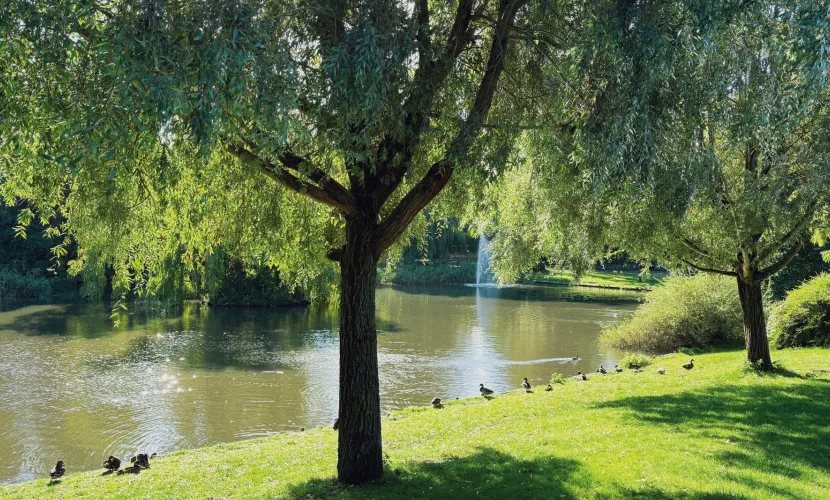
MIND Museum is housed at Teglgårdsparken 17, in one of the former patient buildings for women at Middelfart psychiatric hospital. Here you’ll see exhibitions on everyday life and conditions at the institution, from its founding in 1888 to its closure in 1999. The beautiful surroundings, with views over Fænøsund, were deliberately built into the treatment of patients at the time, as a means of calming the mind. The museum is a journey into the everyday life of patients and staff.
Teglgårdsvej
5500 Middelfart
Denmark