


Æbelø
Æbelø – the island where nature rules
Æbelø is an isolated time capsule in the Kattegat. Since 1995, the Aage V. Jensen Nature Foundation has worked to return this deserted island to the wild, making it one of Denmark's most important sanctuaries for rare species today. As a visitor, you step into a fragile nature reserve where human traces are few and the tranquility is total.
Nature's own dynamics
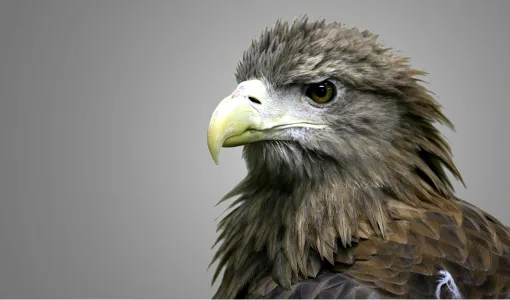
After centuries of farming and hunting, nature is now allowed to look after itself. All cultivation has ceased, and kilometers of game fencing have been removed to make way for nature's free course. As an internationally protected Ramsar area, the island now ensures the necessary peace for a rich birdlife – including a breeding pair of white-tailed eagles and the rare, colorful golden oriole.
Forests, plains, and free-roaming animals
The majority of Æbelø is covered by forest, but there are also open plains where you can see fallow deer and mouflon grazing freely. On your trip around the island, you can experience:
- The living cliffs: On the north side, the coastline is in constant flux due to the plastic "Æbelø clay." Large beech trees slide into the sea and continue to grow at wild angles.
- Untouched forest: Fallen trees are left undisturbed as habitats for fungi and insects. In fact, nearly a quarter of all Danish beetle species are found here.
- The Troll Forest: Ancient, gnarled oaks create a fairy-tale setting, where the forest floor in May and June turns purple with thousands of Early Purple Orchids.
A protected sanctuary
Æbelø was designated a protected area in 1998 to preserve its unspoiled nature. Here, the ecosystem is allowed to develop undisturbed, restoring life conditions for animals and plants that otherwise struggle to find space. By visiting the island on nature's terms and respecting the special rules, you help preserve this unique gem for the future.
How to get to Æbelø
The trip to Æbelø is a journey on nature's terms. The island can only be reached through the water – either by walking or in your own kayak or boat. You walk to Æbelø from the parking lot at Lindøhoved. Please note that there are a limited number of spaces, and if there are no more vacant parking spots, you will have to leave – as there is no room for more people on the island at that time.
Most important things before you go
- Check weather and water levels: Always look at dmi.dk/vandstand (select Bogense) just before you go. Strong winds from the northwest mean elevated water levels!
- The tide is your guide: Use the tide table. The water rises and falls gradually. If you want to take the trip when the water is lowest, you should start approx. 3 hours before low tide and return no later than 2-3 hours after low tide.
- Never walk in the dark: It is life-threatening and impossible to orient yourself in the water during evening and night hours. Plan your trip so you are back well before sunset.
- The trip is not suitable for people with poor health or walking difficulties.
- Winter warning: From mid-September to mid-May, the water is freezing and the weather is harsh. We do not recommend the trip during this period unless you are very experienced and wearing waders and the right equipment.
- Parking: Set your GPS to Lindøhoved 60. If the parking lot is full, the island's capacity has been reached, and you should find another time (e.g., outside the school summer holidays). It is not possible to park elsewhere.
- There are guided walks to Æbelø during the summer. Keep an eye on the Facebook page "Nordfynsk Guide".
How to read the tide table:
In the tide table for Æbelø, you will see the letters H (High tide) and L (Low tide).
- At H, the water is over 1 meter deep.
- At L, it is approx. 10-15 cm deep (if the wind doesn't interfere).
- From May to September, the table is adjusted for daylight saving time. From September to May, you must add one hour yourself (standard time).
The hike itself (approx. 1.5 hours each way)
The route is approx. 4 km long in total through water and over land:
- Through the water: From Lindøhoved, walk for approx. 45 minutes through the water towards Æbelø Holm. Follow the poles! They indicate the direction where the water is shallowest.
- Across the holm: Walk across Æbelø Holm (the small island before Æbelø).
- Final stretch: Finally, there is approx. 20 minutes of walking through water before you stand on Æbelø itself.
Practical checklist
Æbelø is deserted and has no facilities. Therefore, you must bring everything yourself:
- Plenty of drinking water, food, and trash bags for your own waste.
- Footwear: Old sneakers or water sandals are best. Avoid rubber boots – they become life-threatening "anchors" if filled with water.
- Toilet: Only available at the parking lot at Lindøhoved where the trip starts.
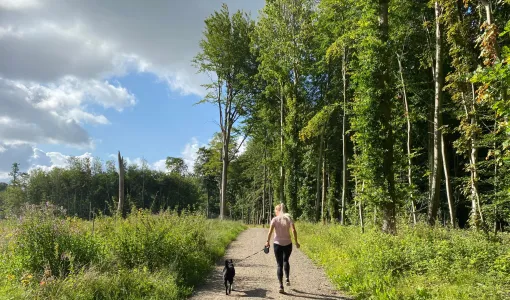
- Dog: Must be kept on a leash and must be able to handle the long trip through the water both ways.
FAQ about Æbelø: Rules and access
When and where can I walk on the island?
You can move along the beach 24/7, and you can walk on the main paths, roads, and open areas between 6 AM and sunset. It is not allowed to stay overnight or set up a tent. Violation of the rules can lead to a police report.
When should I leave in relation to the tide?
Plan your trip to start approx. 2-3 hours before low tide. Avoid the period 2 hours before and 2 hours after high tide, as the water is highest then. Always check dmi.dk/vandstand (select Bogense) before you go – onshore winds from the northwest can make the water much deeper than expected.
Can I visit the island in my own boat or kayak?
Yes, you are welcome to come sailing. There is no harbor on the island, but it is possible to anchor off the island and enjoy the view or go ashore on the beach.
Where do I park, and what if it's full?
Use the parking lot at Lindøhoved 60. If the lot is full, the island's capacity is reached, and it's best to come back another day. Parking elsewhere in the area is not allowed.
Are there areas closed to visitors?
Yes, out of respect for the birds' nesting season: March 1st – July 15th: No access to Dræet. On Æbelø Holm, stay on the road. Drætte Holm is also closed to the public from March 1st to September 1st.
Ruins and houses: Keep a good distance! The ruins are far too dangerous, and you must not enter any of the abandoned houses.
Can I light a fire or use a grill?
You must not light a fire or use open flames on Æbelø. You may not bring wood to the island, and the wood on the island must remain part of nature's cycle. However, using a camping stove (Primus) for cooking is allowed.
Can I bring my dog or horse?
Dog: Yes, but always on a leash.
Horse: You must apply for permission from the Aage V. Jensen Nature Foundation. Access is only for riding groups of max 10 horses. Note that there is a stony bottom between Æbelø Holm and Æbelø, which is not good for horses to walk on. Riding on the beach is not allowed between March 1st and July 15th.
Are there toilets or access to water on the island?
No, Æbelø is a deserted island with no facilities. There are no toilets or drinking water on the island itself. However, at Lindøhoved, where the trip begins, you will find public toilets and water taps. If nature calls while on the island, we recommend bringing a small spade and biodegradable toilet paper.
Can you take a tractor to Æbelø?
No, unfortunately, that is not possible. There is no public transport or tractor service for visitors to and from the island. Any tractors you might see are used exclusively by the island's staff. The trip must be made entirely on foot.
What footwear should I choose?
It is important to wear footwear that can handle water. Between Lindøhoved and Æbelø Holm, the seabed is sandy but contains stones and shells, so water shoes or sandals are a good idea. Between Æbelø Holm and Æbelø itself, you will be walking on a stony seabed in the water, where shoes are necessary. We advise against rubber boots, as the water is often deep or wavy enough to fill them. Bring a pair of dry shoes and socks in a waterproof bag for the hike on the island itself.
Is the trip suitable for people with walking difficulties?
No, the trip to Æbelø is physically demanding. It takes at least an hour and a half each way, walking through water, on soft sand, and over uneven stones. It requires good physical condition and steady footing, and the trip is therefore not suitable for those with walking difficulties or health challenges.
What can I take home from nature?
Nothing. You must not remove plants, animals, fungi, or dead wood from Æbelø. Everything must remain on the island.
Thank you for helping us take care of nature on Æbelø
Æbelø is one of the few places in Denmark where nature is allowed to be truly wild. We hope you have an unforgettable trip through the water and a fantastic day under the treetops. Take care of the island, take care of each other – and have a great trip!
Æbelø
5400 Bogense
Denmark
Området byder på flere skønne naturoplevelser. Bliv inspireret her.